.

Wednesday, June 8, 2011

Currency Correlations, Part II: Canadian Dollar Begins its Decline

Currency Correlations, Part II: Canadian Dollar Begins its Decline
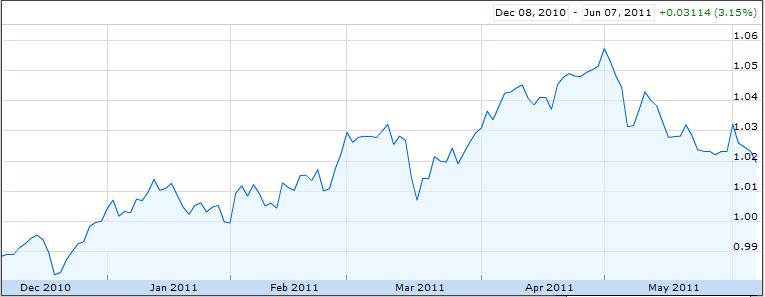
In April, I wrote a post entitled, “Economic Theory Implies Canadian Dollar will Fall,” in which I argued that the currency’s impressive rise was belied by fundamentals. It seems the gods of forex read that post; since then, the Loonie has fallen 3% against the US dollar alone. Based on my reading of the tea leaves, the loonie will fall further over the coming months, and finish the year below parity.


My contention is basically that investors are falsely treating the Loonie is a high-yield growth currency, and hence, bidding up its value. There are a few reasons why I believe this viewpoint is completely erroneous. First of all, Canada’s economy is both plain and mature. While it is indeed rich in natural resources would seem to make it stand-out, commodities exports account for only a small portion of GDP. Given that the US absorbs 75% of its exports, it’s no accident that Canada’s economic fortunes are tied closely to the US. Finally, Canadian interest rates are pretty mediocre, which means there is neither a strong monetary nor an economic impetus for buying the Loonie against the dollar.
While Canadian GDP and inflation have exceeded analysts’ predictions, the consensus expectation is still for the Bank of Canada to hold off on tightening until September or so. Even the most bullish forecasts show a benchmark interest rate of only 1.75% by the end of 2011 and perhaps 3% at the end of 2012. In other words, it will be a long time before the Loonie becomes a viable target currency for the carry trade.
According to OECD models, the Canadian dollar is overvalued by 17% against the Dollar on a purchasing power parity (ppp). While it is generally dubious to apply this concept to currency markets, I think it’s reasonable to invoke it when analyzing the USD/CAD. The two economies share more than just a border. As I said, their economies are closely intertwined, and goods, services (and people!) move freely between the two. Thus, you would expect that large discrepancies in prices should disappear over the medium-term. In fact, the Canadian trade balance recently slipped into deficit for the first time in 40 years (corresponding with the Loonie’s record high level), which shows just how quickly consumers can shift their attention south of the border. That means that either Canadian prices have to decline (something which retailers are always reluctant to effect) or the Loonie must drop further against the Dollar.
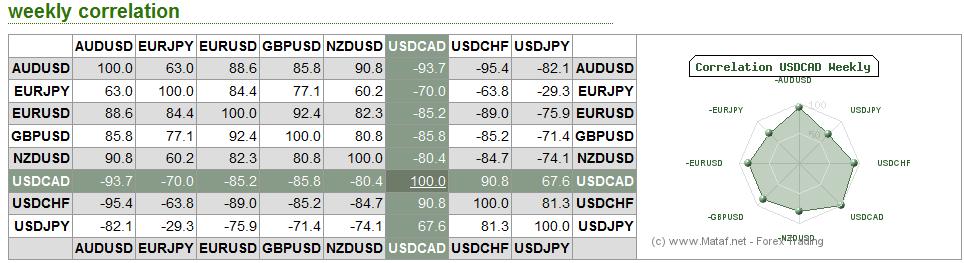
Of course, there is a mitigating factor: the US dollar may fall even faster than the loonie. While it would seem impossible to tease apart the loonie’s rise from the dollar’s fall (since a rise in CADUSD inherently reflects both), we can still make an educated guess. For example, consider that the Canadian dollar is strongly correlated (i.e. greater than 80 or less than -80 in the chart above) with almost every other major currency, relative to the US dollar. If the correlation was low, than it would imply that the Canadian dollar is fluctuating (in this case falling) for endemic reasons. In this case, however, the almost perfect correlation with the majors shows that it is almost definitely a US dollar spike rather than a Canadian dollar correction.
Whether this trend continues then, depends more on the health of the US dollar and less on what investors think about the loonie.
Monday, May 23, 2011

Risk Still Dominates Forex. The Dollar as “Safe Haven” is Back!

Risk Still Dominates Forex. The Dollar as “Safe Haven” is Back!
Well over two years have passed since the collapse of Lehman Brothers and the accompanying climax of the credit crisis. Most economies have emerged from recession, stocks have recovered, credit markets are strong, and commodities prices are well on their way to new record highs. And yet, even the most cursory scanning of headlines reveals that all is not well in forex markets. Hardly a week goes by without a report of “risk averse” investors flocking to “safe haven” currencies.

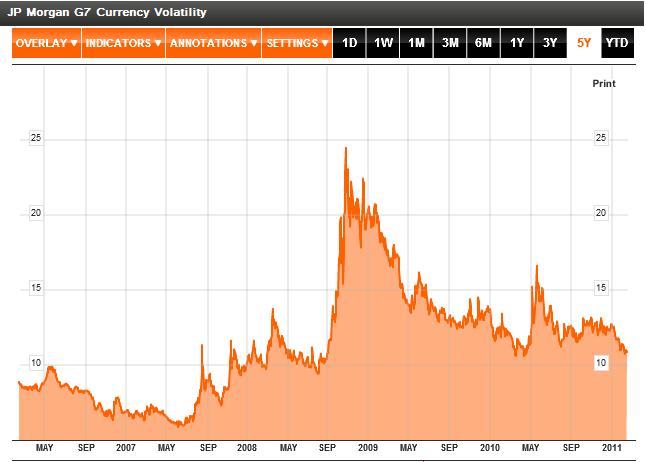
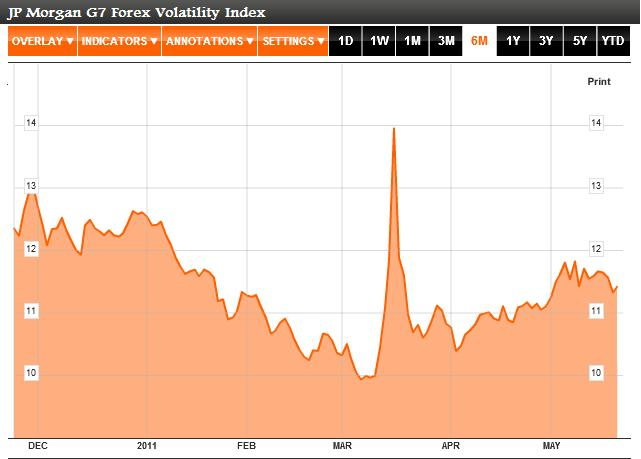
As you can see from the chart below, forex volatility has risen steadily since the Japanese earthquake/tsunami in March. Ignoring the spike of the day (clearly visible in the chart), volatility is nearing a 2011 high.What’s driving this trend? Bank of America Merrill Lynch calls it the “known unknown.” In a word: uncertainty. Fiscal pressures are mounting across the G7. The Eurozone’s woes are certainly the most pressing, but that doesn’t mean the debt situation in the US, UK, and Japan are any less serious. There is also general economic uncertainty, over whether economic recovery can be sustained, or whether it will flag in the absence of government or monetary stimulus. Speaking of which, investors are struggling to get a grip on how the end of quantitative easing will impact exchange rates, and when and to what extent central banks will have to raise interest rates. Commodity prices and too much cash in the system are driving price inflation, and it’s unclear how long the Fed, ECB, etc. will continue to play chicken with monetary policy.

Every time doubt is cast into the system – whether from a natural disaster, monetary press release, surprise economic indicator, ratings downgrade – investors have been quick to flock back into so-called safe haven currencies, showing that appearances aside, they are still relatively on edge. Even the flipside of this phenomenon – risk appetite – is really just another manifestation of risk aversion. In other words, if traders weren’t still so nervous about the prospect of another crisis, they would have no reasons to constantly tweak their risk exposure and reevaluate their appetite for risk.
Over the last few weeks, the US dollar has been reborn as a preeminent safe haven currency, having previously surrendered that role to the Swiss Franc and Japanese Yen. Both of these currencies have already touched record highs against the dollar in 2011. For all of the concern over quantitative easing and runaway inflation and low interest rates and surging national debt and economic stagnation and high unemployment (and the list certainly goes on…), the dollar is still the go-to currency in times of serious risk aversion. Its capital markets are still the deepest and broadest, and the indestructible Treasury security is still the world’s most secure and liquid investment asset. When the Fed ceases its purchases of Treasuries (in June), US long-term rates should rise, further entrenching the dollar’s safe haven status. In fact, the size of US capital markets is a double-edge sword; since the US is able to absorb many times as much risk-averse capital as Japan (and especially Switzerland, sudden jumps in the dollar due to risk aversion will always be understated compared to the franc and yen.
On the other side of this equation stands virtually every other currency: commodity currencies, emerging market currencies, and the British pound and euro. When safe haven currencies go up (because of risk aversion), other currencies will typically fall, though some currencies will certainly be impacted more than others. The highest-yielding currencies, for example, are typically bought on that basis, and not necessarily for fundamental reasons. (The Australian Dollar and Brazilian Real are somewhere in between, featuring good fundamentals and high short-term interest rates). As volatility is the sworn enemy of the carry trade, these currencies are usually the first to fall when the markets are gripped by a bout of risk aversion.
Of course, it’s nearly impossible to anticipate ebbs and flows in risk appetite. Still, just being aware how these fluctuations will manifest themselves in forex markets means that you will be a step ahead when they take place.

Thursday, May 12, 2011

Are Forex Markets Underpricing Volatility?

Are Forex Markets Underpricing Volatility?
This question has been raised by several market commentators, including The Wall Street Journal. Its recent analysis, entitled “Currency Investors: What, Me Worry?” wondered whether the forex markets might not have become too complacent about risk and have seriously underestimated the possibility of another shock.

First, some basics. There are two principal volatility measurements: implied
volatility and realized volatility. The former is so-called because it must be deduced indirectly. In the Black-Scholes model for pricing options, volatility is the only unknown variable and thus is implied by current market prices. It serves as a proxy for investor expectations for volatility over the period for which the option is valid. Realized volatility is of course the actual volatility that is observed in currency markets, calculated based on the size of fluctuations over a given period of time. When fluctuations are greater (whether upward or downward), volatility is said to be high.
 
For short time frames, implied volatility tends to be very close to realized volatility. For longer time-frames, however, this is not necessarily the case: “The long-dated implied volatilities are often driven to extreme values by one-sided demand or supply – the difference between implied and realised volatilities this causes is particularly large during periods of risk aversion in the market…making implied volatility a particularly poor proxy for realised volatility during periods of market unrest.” In practice, this is reflected by higher prices for long-dated put or call options (depending on the direction of the move that investors are trying to hedge against).
 
Indeed, most volatility metrics are well below their historical averages and are rapidly closing in on pre-credit crisis levels. This is true for the JP Morgan G7 3-month forex volatility index, the S&P VIX, as well as for specific currencies. Mataf.net (whose content manager I interviewed yesterday) contains replete short-term and long-term data for a few dozen currency pairs, and you can see that almost all of them feature the same downward trend. According to the WSJ, “Investors believe there is a 66% chance each day for the next month that the euro and pound will move no more than 0.6% and 0.5%, respectively—both limited moves.” In addition, “A gauge of the euro’s ‘realized’ volatility, which measures how much daily changes deviate from their recent average, is only 8.6%, lower than its 11% rolling one-year average.”
Of course, some commentators don’t see any problem here. They see it both as a positive indication that the markets have returned to normal following the financial crisis, and as a reflection of the correlation that has developed between stock prices and forex markets. (You can see from the chart below the strong inverse correlation between the S&P and the US dollar). According to Deutsche Bank, “Most news that should have shocked the market this year has not managed to do so for sufficiently long to make volatility rise sustainably. Our analytical models tell us that we are indeed moving to a low volatility environment again.”
 
On the other side of the debate is a growing consensus of investors that sees a pendulum that has swung too far. “I just don’t see how volatility will not increase quite substantially,” said one money manager. “There is significant potential for shocks to the system that currency volatility levels suggest the market is not prepared for,” added another, citing higher commodities prices and inflation, growing public debt, and the imminent end of the Fed’s QE2 monetary stimulus.
 
To be sure, volatility has started to tick up over the last month. This trend has also been reflected in options prices: “Many investors have avoided buying short-dated currency options this year, instead focusing on longer-dated protection, a phenomenon called a ‘steep volatility curve’…that trend has slowed a bit, with investors moving to hedge against near-term yen, euro and dollar swings.”
 
Currency traders should start to think about making a few adjustments. Those that think that volatility will continue to rise and/or that the markets are currently underpricing risk can employ a volatility strangle strategy, buying way out-of-the-money puts and calls. The options will pay off if there is a big move in either direction, with no downside risk. Those that think that volatility will continue declining or at least remain at current low levels can make use of the carry trade. Those pairs where interest rate differentials are highest and volatility levels are lowest represent the best candidates. BNP Paribas is also reportedly developing a product that will make it easier for traders to make volatility bets without having to rely on indirect means.

Friday, April 29, 2011

Emerging Market Currency Correlations Break Down

Emerging Market Currency Correlations Break Down
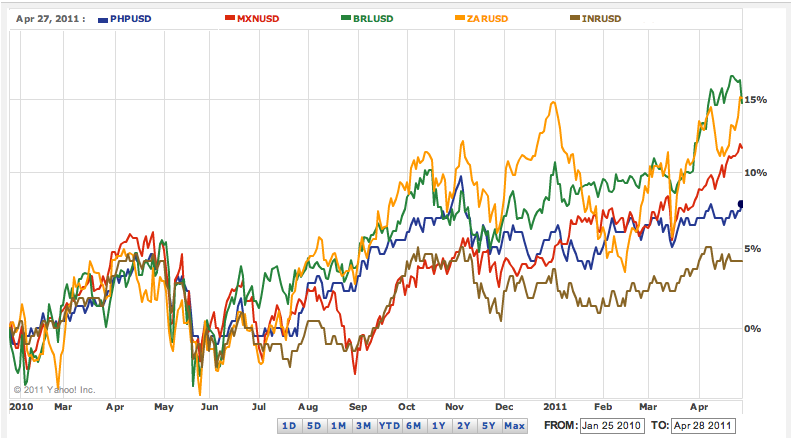
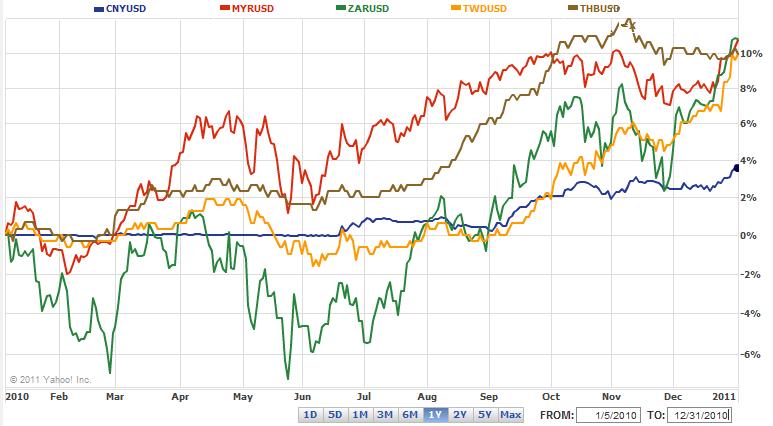
A picture is truly worth a thousand words. [That probably means I should stop writing lengthy blog posts and instead stick to posting charts and other graphics, but that's a different story...] Take a look at the chart below, which shows a handful of emerging market (“EM”) currencies, all paired against the US dollar. At this time last year, you can see that all of the pairs were basically rising and falling in tandem. One year later, the disparity between the best and worst performers is already significant. In this post, I want to offer an explanation as to why this is the case, and what we can expect going forward.


In the immediate wake of the credit crisis, I think that investors were somewhat unwilling to make concentrated bets on specific market sectors and specific assets, as part of a new framework for managing risk. To the extent that they wanted exposure to emerging markets, then, they would achieve this through buying broad-based indexes and baskets of currencies. As a result of this indiscriminate investing, prices for emerging market stocks, bonds, currencies, and other assets all rose simultaneously, which rarely happens.
Around November of last year, that started to change. The currency wars were in full swing, inflation was rising, and there were doubts over whether EM central banks would have the stomach to tighten monetary policy, lest it increase the appreciation pressures on their respective currencies. EM stock and bond markets sputtered, and EM currencies dropped across the board. Shortly thereafter, I posted Emerging Market Currencies Still Have Room to Rise, and currencies resumed their upward march. It wasn’t until recently, however, that bond and stock prices followed suit.

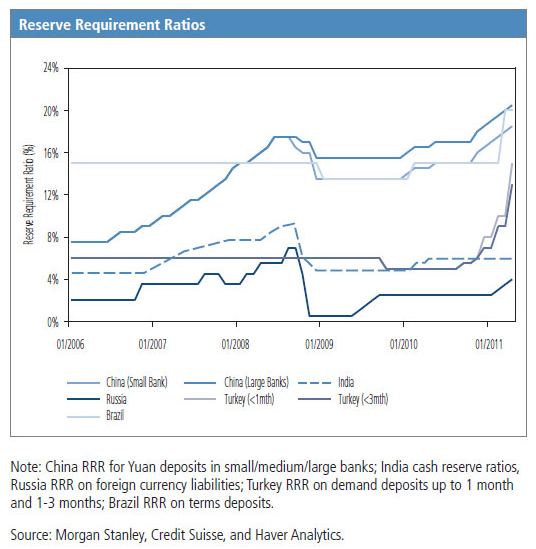
What changed? In a nutshell, emerging market central banks have gotten serious about tackling inflation. That’s not to say that they raised interest rates and accepted currency appreciation as an inevitable byproduct. On the contrary, they have adopted so-called macroprudential measures (quickly becoming one of the buzzwords of 2011!), with the goal of heading off inflation without influencing broader economic growth. Most EM central banks have sought to achieve this by raising their required reserve ratios (see chart above), limiting the amount of money that banks can lend out. In this way, they sought to curtail access to credit and limit growth in the money supply without inviting a flood of yield-seeking investors from abroad. Other central banks have gone ahead and hiked interest rates (namely Brazil), but have used taxes and other types of capital controls to discourage speculators.
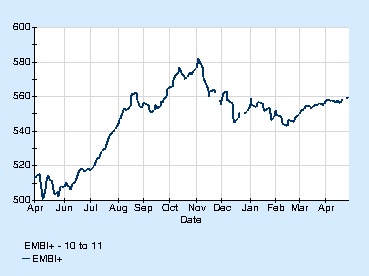
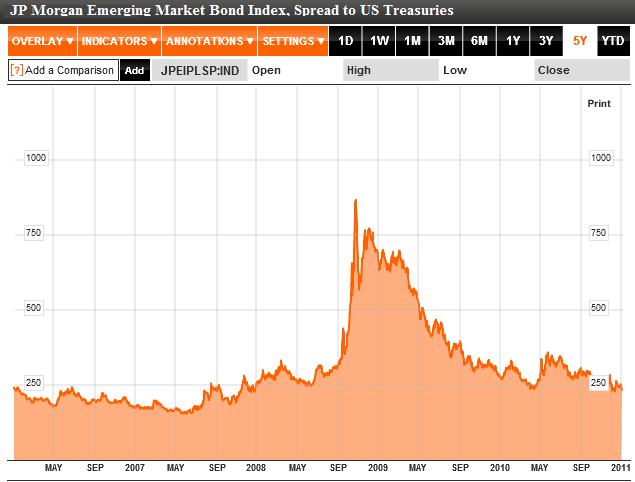
You can see from the chart of the JP Morgan Emerging Market Bond Index (EMBI+) below that EM bond markets have rallied, which is the opposite of what you would normally expect from a tightening of monetary policy. However, since EM central banks have thus far implemented tightening without directly influencing interest rates, bond yields haven’t risen as you might expect. In addition, whereas sovereign credit ratings are falling in the G7 as a result of weak fiscal and economic outlooks, ratings are actually being raised for the developing world. As a result, EM yields are falling, and the EMBI+ spread to US Treasury securities is currently under 3 percentage points.
The primary impetus for buying emerging markets continues to come from interest rate differentials. Given that interest rates remain low (on both an historical and inflation-adjusted basis), however, it’s unclear whether support for EM currencies will remain in place, or is even justified. Furthermore, I wonder if demand isn’t being driven more by dollar weakness than by EM strength. If you re-cast the chart above relative to the euro, the performance of EM currencies is much less impressive, and in some cases, negative. This trend is likely to continue, as Ben Bernanke’s recent press conference confirmed that the Fed isn’t really close to hiking interest rates.
Ultimately, the outlook for EM currencies is tied closely to the outlook for inflation. If raising the required reserve ratios is enough to head off inflation (and other forces, such as rising commodity prices, abate), then EM central banks can probably avoid raising interest rates. In that case, you can probably expect a correction in forex markets, which will be amplified by rate hikes in the G7. On the other hand, if inflation continues to rise, broad EM interest rate hikes will become necessary, and the floodgates will have been opened to carry traders.Either way, the gap between the high-yielding currencies and the low-yielding ones will continue to widen. In answering the question that I posed above, I expect that regardless of what happens, investors will only become more discriminate. EM central banks are diverging in their conduct of monetary policy, and it no longer makes sense to treat all EM currencies as one homogeneous unit.

Sunday, April 17, 2011

Where are Exchange Rates Headed? Look at the Data

Where are Exchange Rates Headed? Look at the Data
At this point, it’s cliche to point to the so-called data deluge. While once there was too little data, now there is clearly too much, and that is no less true when it comes to data that is relevant to the forex markets. In theory, all data should be moving in the same direction. Or perhaps another way of expressing that idea would be to say that all data should tell a similar story, only from different angles. In reality, we know that’s not the case, and besides, one can usually engage in the reverse scientific method to find some data to support any hypothesis. If we are serious about finding the truth and not about proving a point, then, the question is: Which data should we be looking at?

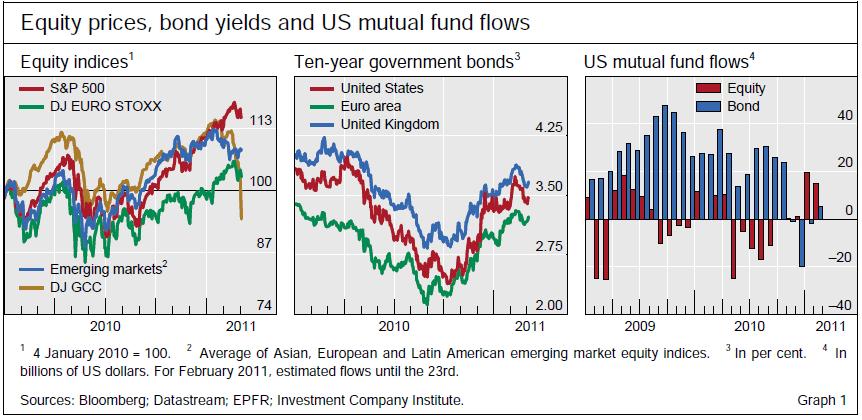
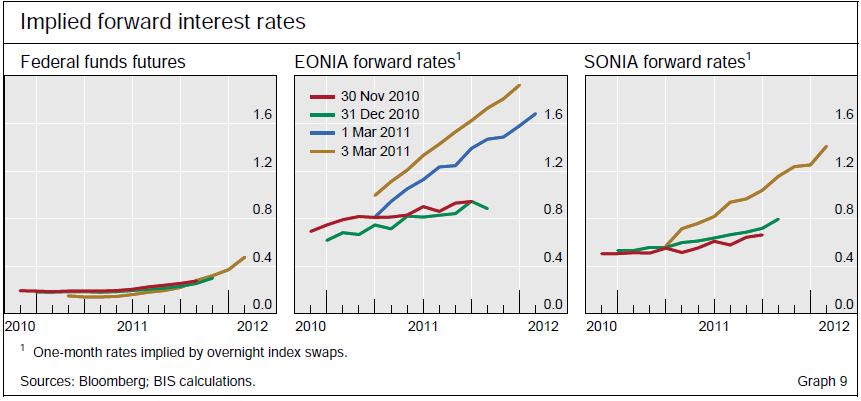
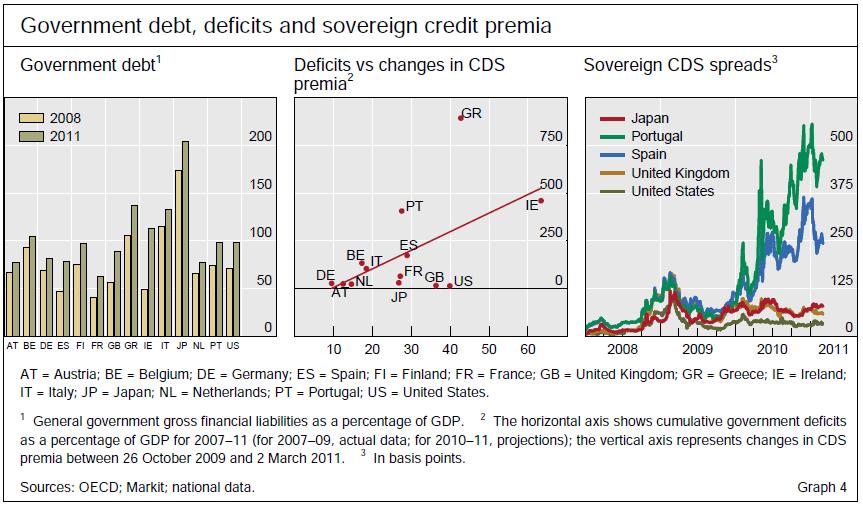
I think the quarterly Bank of International Settlements (BIS) report is a good place to start. The report is not only a great-read for data junkies, but also represents a great snapshot of the current financial and economic state of the world. It’s all macro-level data, so there’s no question of topicality. (If anything, one could argue that the scope is too broad, since data is broken down no further than US, UK, EU, and Rest of World). The best part is that all of the raw data has already been organized and packaged, and the output is clearly presented and ready for interpretation.

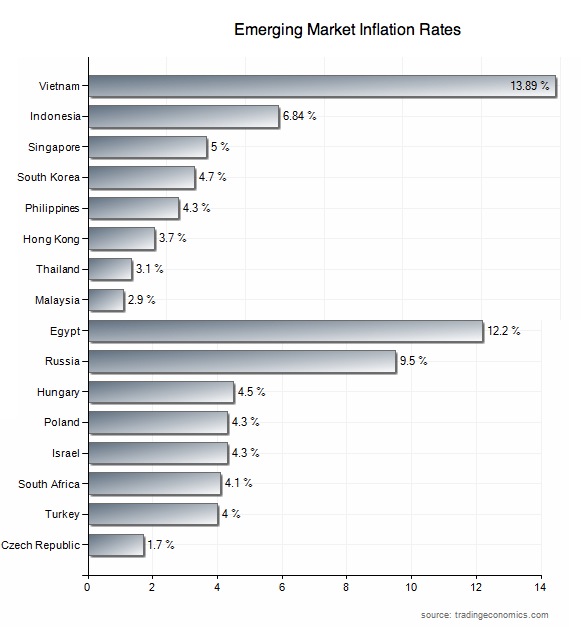
Anyway, the stock market rally that began in 2010 has showed no signs of slowing down in 2011, with the US firmly leading the rest of the world. As is usually the case, this has corresponded with an outflow of cash from bond markets and a steady rise in long-term interest rates. However, emerging market equity and bond returns have started to flag, and as a result, the flow of capital into emerging markets has reversed after a record 2010. Without delving any deeper, the implication is clear: after 2+ years of weakness, developed world economies are now roaring back, while growth in emerging markets might be slowing.
Economic growth, combined with soaring commodities prices, is already producing inflation. (See my previous post for more on this subject). However, the markets expect that the ECB, BoE, and Fed (in that order) will all raise interest rates over the next two years. As a result, while investors expect inflation to rise over the next decade, they believe it will be contained by tighter monetary policy and moderate around 2-3% in industrialized countries.

The picture for emerging market economies is slightly less optimistic, however. If you accept the BIS’s use of China, India, and Brazil as representative of emerging markets as a whole, rising interest rates will help them avoid hyperinflation, but significant price inflation is still to be expected. I wonder then if the pickup in cross-border lending over this quarter won’t slow down due to expectations of diminishing real returns.
Any sudden optimism in the Dollar and Euro (and the Pound, to a lesser extent) must be tempered, however, by their serious fiscal problems and consequent volatility. As a result of the credit crisis (and pre-existing trends), government debt has risen substantially over the last three years, topping 100% of GDP for the US and 200% of GDP for Japan. Credit default swap rates (which represent the markets’ attempt to gauge the probability of default) have risen across the board. To date, gains have been highest for “fringe” countries, but regression analysis suggests that rates for pillar economies need to rise proportionately to account for the the bigger debt burden. According to a BIS analysis, US and UK banks are very exposed to Eurozone credit risk, which means a default by one of the PIGS would reverberate around the western world.
While I worry that such a basic analysis makes me appear shallow, I stand by this “20,000 foot” approach, with the caveat that it can only be used to make extremely general conclusions. (More specific conclusions naturally demand more specific data analysis!) They are that industrialized currencies (led by the Dollar and perhaps the Euro) might stage a comeback in 2011, due to stronger economic growth and higher interest rates. While GDP growth and interest rates will undoubtedly be higher in emerging markets, investors were extremely aggressive in pricing this in. An adjustment in theoretical models naturally demands a correction in actual emerging market exchange rates!

Friday, April 15, 2011

Record Commodities Prices and the Forex Markets

Record Commodities Prices and the Forex Markets
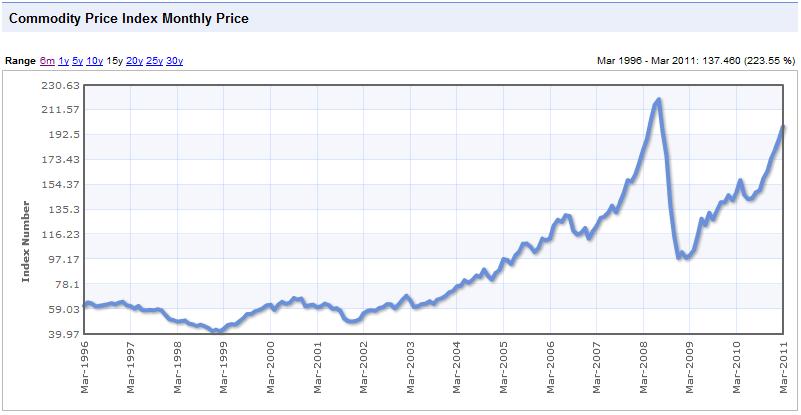
Propelled by economic recovery and the recent Mideast political turmoil, oil prices have firmly shaken off any lingering credit crisis weakness, and are headed towards a record high. Moreover, analysts are warning that due to certain fundamental changes to the global economy, prices will almost certainly remain high for the foreseeable future. The same goes for commodities. Whether directly or indirectly, the implications for forex market will be significant.


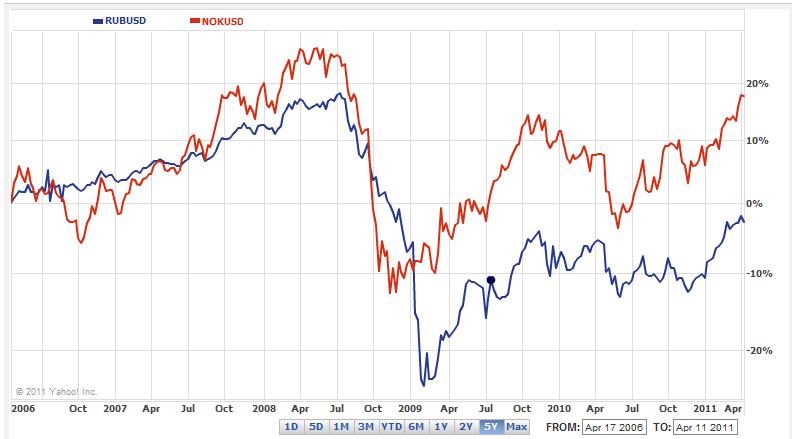
First of all, there is a direct impact on trade, and hence on the demand for particular currencies. Norway, Russia, Saudia Arabia, and a dozen other countries are witnessing record capital inflow expanding current account surpluses. If not for the fact that many of these countries peg their currencies to the Dollar and/or seem to suffer from myriad other issues, there currencies would almost surely appreciate. In fact, the Russian Rouble and Norwegian Krona have both begun to rise in recent months. On the other hand, Canada and Australia (and to a lesser extent, New Zealand) are experiencing rising trade deficits, which shows that their is not an automatic relationship between rising commodity prices and commodity currency strength.
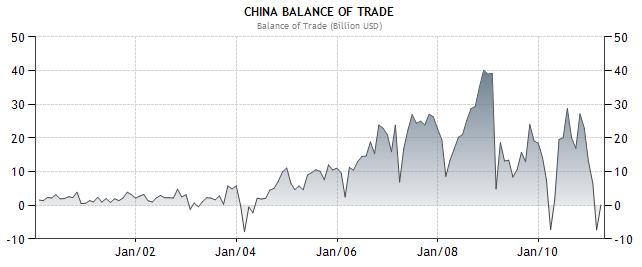
Those countries that are net energy importers could experience some weakness in their currencies, as trade balances move against them. In fact, China just recorded its first quarterly trade deficit in seven years. Instead of viewing this in terms of a shift in economic structure, economists need to understand that this is due in no small part to rising raw materials prices. Either way, the People’s Bank of China (PBOC) will probably tighten control over the appreciation of the Chinese Yuan. Meanwhile, the nuclear crisis in Japan is almost certainly going to decrease interest in nuclear power, especially in the short-term. This will cause oil and natural gas prices to rise even further, and magnify the impact on global trade imbalances.
A bigger issue is whether rising commodities prices will spur inflation. With the notable exception of the Fed, all of the world’s Central Banks have now voiced concerns over energy prices. The European Central Bank (ECB), has gone so far as to preemptively raise its benchmark interest rate, even though Eurozone inflation is still quite low. In light of his spectacular failure to anticipate the housing crisis, Fed Chairman Ben Bernanke is being careful not to offer unambiguous views on the impact of high oil prices. Thus, he has warned that it could translate into decreased GDP growth and higher prices for consumers, but he has stopped short of labeling it a serious threat.
On the one hand, the US economy is undergone some significant structural changes since the last energy crisis, which could mitigate the impact of sustained high prices. “The energy intensity of the U.S. economy — that is, the energy required to produce $1 of GDP — has fallen by 50% since then as manufacturing has moved overseas or become more efficient. Also, the price of natural gas today has stayed low; in the past, oil and gas moved in tandem. And finally, ‘we’re closer to alternative sources of energy for our transportation,’ ” summarized Wharton Finance Professor Jeremy Siegal. From this standpoint, it’s understandable that every $10 increase in the price of oil causes GDP to drop by only .25%.
On the other hand, we’re not talking about a $10 increase in the price of oil, but rather a $50 or even $100 spike. In addition, while industry is not sensitive to high commodity prices, American consumers certainly are. From automobile gasoline to home eating oil to agricultural staples (you know things are bad when thieves are targeting produce!), commodities still represent a big portion of consumer spending. Thus, each 1 cent increase in the price of gas sucks $1 Billion from the economy. “If gas prices increased to $4.50 per gallon for more than two months, it would ‘pose a serious strain on households and could put the entire recovery in jeopardy. Once you get above $5, [there is] probably above a 50% chance that the economy could face a downturn.’ ”
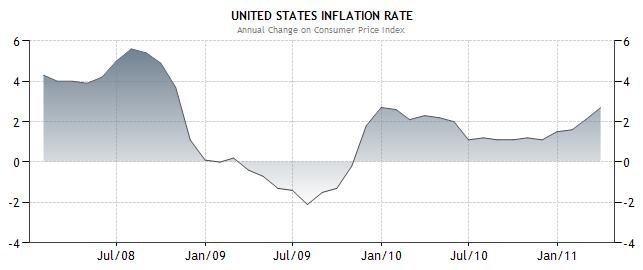
Even if stagflation can be avoided, some degree of inflation seems inevitable. In fact, US CPI is now 2.7%, the highest level in 18 months and rising. It is similarly 2.7% in the Eurozone and Australia, where both Central Banks have started to become more aggressive about tightening monetary policy. In the end, no country will be spared from inflation if commodity prices remain high; the only difference will be one of extent.
Over the near-term, much depends on what happens in the Middle East, since an abatement in political tensions would cause energy prices to ease. Over the medium-term, the focus will be on Central Banks, to see if/how they deal with rising inflation. Will they raise interest rates and withdraw liquidity, or will they wait to act for fear of inhibiting economic recovery? Over the long-term, the pivotal issue is whether economies (especially China) can become less energy intensive or more diversified in their energy consumption.
At the moment, most economies are dangerously exposed, with China and the US topping the list. Russia, Norway, Brazil and a select few others will earn a net benefit from a boom in prices, while most others (notably Australia and Canada) are somewhere in the middle.

Saturday, April 9, 2011

Report Portends Changes to Forex Reserve Currencies

Report Portends Changes to Forex Reserve Currencies
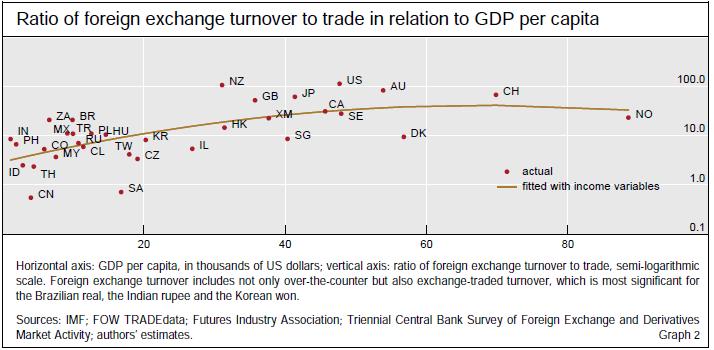
This week’s Bank of International Settlements (BIS) quarterly report came with some interesting revelations (most of which I’ll discuss in a later post). Below, I’d like to focus on one particularly interesting section entitled, “Foreign exchange trading in emerging currencies.” This section carries tremendous implications for the future of reserve currencies and is a must read for fundamental analysts.

According to the BIS, “Foreign exchange turnover evolves in a predictable fashion with increasing income. As income per capita rises, currency trading cuts loose from underlying current account transactions…moreover, currencies with either high or very low yields attract more trading, consistent with their role as target and funding currencies in carry trades.” In other words, the most liquid currencies (and hence, most suitable reserve currencies) are primarily those of advanced economies and secondarily those with abnormal interest rates.
In theory, one would expect a close correlation between forex turnover and trade. In fact, this turns out to be precisely the case for lesser-developed countries. Since the capital markets of such countries are commensurately undeveloped, offering limited opportunities for foreign investment, most of the demand for their currencies stems directly from trade. In fact, the currencies of Malaysia, Indonesia, Saudi Arabia, and (notably) China closely fit this profile, with a 1:1 ratio between forex turnover and trade.
At the same time, the BIS discovered a strong correlation between the ratio of foreign exchange turnover to trade and GDP per capita.  That means that as a country grows economically and enters the realm of industrialized countries, its currency will experience exponential growth in turnover. For example, the British Pound and Japanese Yen are exchanged at a quantity that is 50 times greater than required for trading purposes. The ratio of forex turnover to trade for the US Dollar, meanwhile, exceeds 100!
The BIS was able to fit a regression line to the data that seemed to explain this phenomenon quite well. The majority of economies/currencies that it surveyed fall pretty close to this line, suggesting that forex turnover is exactly where it should be relative to GDP per capita and trade. In fact, the line runs directly through the Euro, Hong Kong Dollar, Canadian Dollar, and Swedish Krona, and Norwegian Krona.
There are also plenty of outliers. Given the size of China’s economy, for instance, the model would predict that turnover in the Chinese  Yuan should be 2-3 times what it currently is. Unsurprisingly, all of the world’s major reserve currencies (except for the Euro) can be found well on the other side of the regression line. Turnover in the US Dollar, Japanese Yen, and Australian Dollar is almost twice as high as the model predicts. Perhaps the most flagrant outlier is the New Zealand Dollar, which seems to be traded at a frequency that is 8-10x higher than it should be. Of course, New Zealand is a unique case; there isn’t another economy that is as small and stable, and yet always has higher-than-average interest rates.
One interpretation of this analysis is that demand for the all of the currencies that fall above the regression line should decline over time, and should experience at least some depreciation. The opposite can be said for currencies that currently fall the regression line, especially if their economies continue to expand at a faster-than average pace.
At the same time, it puts things into perspective. Even if demand for the Chinese Yuan doubled in accordance with the BIS model (which would necessitate looser capital controls, among other things), GDP per capital would need to increase 20x and US GDP per capita would need to remain constant in order for the Yuan to rival the Dollar in importance. Also, I’m beginning to wonder if the New Zealand Dollar isn’t in fact oversubscribed and overvalued…

Monday, March 28, 2011

Why the Dollar is Here to Stay

Why the Dollar is Here to Stay
In a recent piece published in the WSJ (“Why the Dollar’s Reign Is Near an End“), Berkley Professor Barry Eichengreen declared that the Dollar will soon cease to be the world’s reserve currency. According to Dr. Eichengreen, within 10 years and for various reasons, the Dollar will become one of many reserve currencies, competing for preference with the Euro, Chinese Yuan, Japanese Yen, and Swiss Franc. While
Dr. Eichengreen makes some good points, however, I don’t think most of his arguments stand up to scrutiny.
His thesis can be boiled down into a few premises. First of all, he argues that it is fundamentally illogical that oil should be priced in Dollars, and that countries conducting bilateral trade should settle their accounts using Dollars. Dr. Eichengreen is right that this represents the main underpinning of the Dollar. He is wrong to suggest that it will change anytime soon.
That’s because oil ultimately has to be priced in currency. It’s entirely possible that oil exporting countries will band together and decide to price oil in Euros, instead. However, this would mainly be useful as a political tool (albeit a very potent one!) and would serve no economic or risk management purpose whatsoever. If oil were priced in terms of a basket of currencies (such as IMF Special Drawing Rights), it might make oil prices less volatile, but then would require oil exporters to receive 5 (or more!) currencies for their oil instead of one! Finally, the price of oil can and does adjust relative to what happens in forex markets. When the Dollar declined in 2007, oil prices skyrocketed commensurately in order to compensate exporters.

The same largely applies to bilateral trade. While it makes sense for two countries with stable currencies (such as Korea and Japan, for example) to use one of their currencies as the main unit for trade, the same cannot be said for countries with more volatile currencies. For example, if Argentina and Israel are trading, one country would be inherently dissatisfied if trade were denominated either in Shekels of Pesos. When bills are settled in Dollars, however, it is easy and economical for both countries to simply convert those Dollars into currencies which may have more utility for them. As with oil, it’s possible that some countries will decide that it makes more sense to settle trade in Euros instead of Dollars, but again, I don’t see what purpose this would serve and any such decision would probably be politically motivated.
Second, Dr. Eichengreen points out that changes in technology have made it easy to instantly calculate exchange rates and easily convert currency. While I think this point is well-taken, I think people enjoy having a common base currency, if only for psychological reasons. Ultimately, this point is irrelevant because it has very little bearing on the supply and demand for particular currencies.
Third, he argues that the Euro and Chinese Yuan both represent latent threats to the Dollar’s preeminence. Again, he’s both right and wrong. The Euro already represents a viable alternative to the Dollar. It’s economy is reasonably strong, its monetary policy is sensible, its capital markets are deep and liquid. On the other hand, it’s being held back by perennial fears about the a Euro breakup, and the fact that the sum of 20 separate parts is not the same as the whole. Since the EU doesn’t issue sovereign debt, risk-averse investors will be limited to buying German/French/etc. bonds, which are always going to be more less liquid and more risky than US Treasury Securities. Besides, you can see from the chart below that the US economy has actually been growing faster than the Eurozone for the last 30 years.

As for China, I expounded in a recent post about how unlikely it is that the Yuan will seriously rival the Dollar anytime soon. While China certainly has plenty of cachet and expanding vehicles for investment, its capital markets remain much too primitive and opaque for Central Banks and risk-averse investors. Most importantly, the structure of China’s economy is such that foreign institutions simply don’t have the opportunity to accumulate Yuan in massive quantities. Simply, the supply is too small. In fact, the Asian Development Bank forecasts that the Yuan will constitute a mere 3-12% of international reserves by 2035. That doesn’t sound very threatening.
Dr. Eichengreen’s final point is that the Dollar’s safe haven status has been compromised. First of all, this is old news. The Yen is already a – if not the – preeminent safe haven currency, thus headlines like “Safe-Haven Yen Gains As Radiation Concern Mounts” that take irony to a whole new level. The same goes for the Swiss Franc. However, any concerns that investors have about the Dollar must necessarily also be projected onto the Yen, Euro, and Pound. All of these currencies face current or looming fiscal crises and slowing economic growth. While investors might diversify into other countries, they’re not going to suddenly dump the Dollar in favor of the Euro.
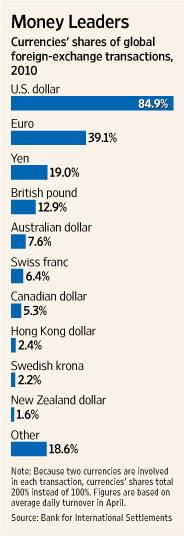
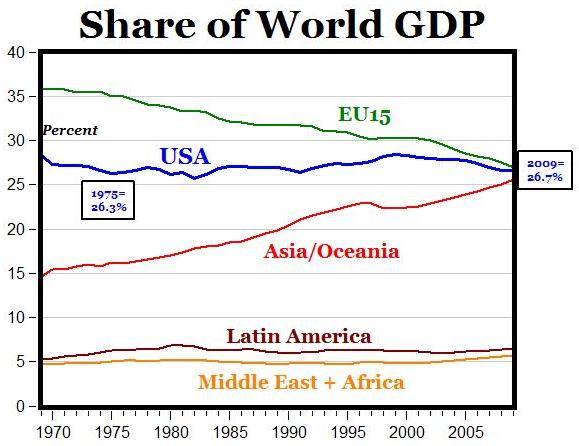
In short, it makes sense that a currency that represents 80% (out of a total of 200%) of all forex transactions and more than 60% of global reserves but only accounts for 25% of GDP, should experience a decline of some sort of decline in popularity. Over the next 50 years, the Dollar will gradually cede share to other currencies. But 10 Years? Give me a break.

Tuesday, March 8, 2011

In Defense of Fundamental Analysis!

I was inspired to write this post by a recent article published by Counting Pips, entitled “The Problem with Forex Fundamental Analysis.” While the author, Warren Seah, delivers a stinging critique of fundamental analysis, I think most of his points are pretty hollow. For the sake of debate, I’d like to present my rebuttal.
Seah’s thesis can essentially be boiled down as follows: First, by the time traders have a chance to act on fundamental developments, it is inherently too late as such developments have already been priced into the
exchange rates. Second, he argues that fundamental metrics are not automatically trustworthy, since the countries presenting them often have their own agendas. Finally, he asserts that the markets’ response to fundamental news releases is often illogical, and may only serve to confuse traders that would otherwise depend on technical signals to make trading decisions.
I think Seah’s first argument is inherently self-defeating. If one were to concede that all fundamental data has already been priced into currencies, that one would have to make the same concession with regard to price data, which is the backbone of technical analysis. In the end, all traders- regardless of analytical approach – believe that efficient markets theory is flawed, and that exchange rates (and other asset prices, for that matter) are not always correctly valued. The goal of any type of analysis is to identify and exploit such inefficiencies.
I think Seah’s second point, meanwhile, is somewhat irrelevant. Regardless of whether the official economic indicators are actually correct, the market will come to its own (implicit) consensus, and the data will still form the basis for investment decisions. In other words, given that comparative inflation rates can and do drive exchange rates, it’s important to be aware of such rates, be they explicitly provided by a government agency or implicitly priced in by investors. Whether the government agency’s figures are accurate or not doesn’t mean that currency investors shouldn’t worry about inflation.
With regard to the final point, I would agree that news releases can cause exchange rates to move illogically, but as Seah concedes, these inefficiencies will usually smooth themselves out over the following trading periods. A fundamental analyst with a long-term time horizon wouldn’t be swayed by such short-term fluctuations, especially if they are illogical. Thus, I would argue that news releases are more likely to interfere with short-term technical strategies than long-term fundamental strategies.
Ultimately, both fundamental factors AND technical factors drive exchange rates, with the latter primarily dictating short-term movements and the latter bearing more heavily on the medium-term and the long-term. By way of example, consider that all else being equal, a currency backed by low inflation, high economic growth, and high interest rates should outperform a currency with high inflation, low GDP growth, and low interest rates over the long-term. Since exchange rates don’t move up and down in straight lines, there will be plenty of opportunities for technical traders to earn a profit on a minute-by-minute and even week-by-week basis. The fact that very few technical traders will look at 5 year charts and very few fundamental traders will waste their time on 1-day charts largely explains the perceived value of both types of analysis.
Ideally, I would say that all traders should be aware of and make use of both types of analysis. In reality, though, I think this is akin to trying to have one’s cake and eat it too. I think it’s much more practical for traders to decide which type of analysis is better suited to their trading style and even their personality type, and analyze accordingly. For the best analogy, consider that Warren Buffet probably doesn’t know what a stochastic is, while quantitative hedge fund managers probably couldn’t care less about value. And yet it’s possible for both to earn consistent, out-sized returns.

Saturday, March 5, 2011

Oil Prices and the FX Conundrum

Oil Prices and the FX Conundrum
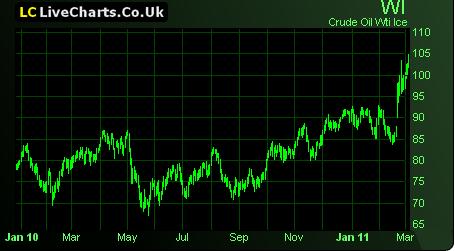
I haven’t blogged about oil prices in quite some time. After prices collapsed in the wake of the financial crisis, there really wasn’t much to talk about. However, the price of crude oil has risen more than 50% since June, and it now seems to be at the forefront of investor consciousness. Currency market watchers, in particular, need to brace themselves for the nuanced and sometimes contradictory ways in which oil prices bear on exchange rates.


Under normal conditions, the impact of rising oil prices on the currency markets is somewhat straightforward. First of all, the currencies of oil-exporting countries will typically experience some degree of appreciation. In addition, since oil contracts are still mainly settled in US Dollars, oil prices and a weak Dollar tend to go hand-in-hand. Second, insofar as rising prices drive inflation, the same can be said for Central Banks that are proactive in tightening monetary policy. As real interest rate differentials widen, (risk-averse) capital will naturally gravitate towards the highest returns.
The same logic cannot be applied to the current situation, however. That’s because this time around, oil prices aren’t being driven by economic fundamentals and rising demand, but rather by concerns over supply. You don’t have to be an expert to understand the connection between the continuing Mid East political crisis and oil futures. In the last two weeks alone, prices have risen a whopping 15% and show no sign of abating, as long as tensions linger unresolved.
From that standpoint, you might expect the political tensions to drive safe haven flows to the US Dollar. On the other hand, you would also expect that the resulting high oil prices might crimp the US economic recovery, and cause traders to punish the Dollar. However, you also need to consider that rising oil prices might also cause the Fed to eventually raise interest rates, or at least rein in QE2, which would be Dollar-positive.
Enough with the theory; let’s look at what’s happening in reality! The Canadian Dollar and Australian Dollar are rising, even though oil accounts for only 7% of the  former’s exports, and is a nil factor in the latter’s economy. It looks like forex investors are confusing oil prices with commodity prices, which are also rising, but at a much slower pace. In addition, since higher energy prices will probably erode economic growth in energy importing countries, this could actually hurt some commodity currencies over the long run.
The US Dollar has fallen across-the-board. While Ben Bernanke has insisted that the impact of higher energy prices on the US economy will be minimal, the markets are either taking the opposite view or are punishing the Dollar for the Fed’s dovishness. In other words, if Bernanke isn’t concerned about oil, he probably won’t cap QE2, and certainly won’t steer any interest rate hikes in the near-term.
Meanwhile, the European Central Bank (ECB), whose mandate is tilted towards maintaining price stability, has begun to voice concerns about the impact of rising commodity prices on inflation. Consumer and producer price indexes are rising across the Eurozone, and members of the ECB have suggested that they will take a proactive stance in preventing them from spurring inflation.
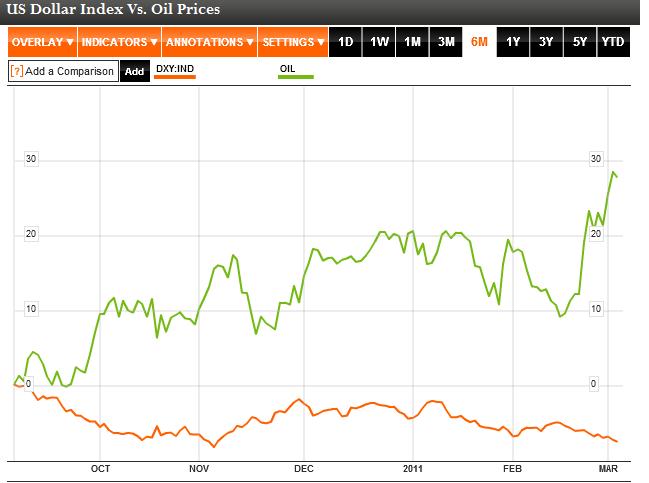
In conclusion, while both the EU and the US are net oil importers, the Euro is poised to outperform the Dollar, all else being equal. In addition, as long as the mid east political protests don’t drive further instability and contribute to any major supply shocks (especially in Saudi Arabia and Iran), there won’t be any impetus towards safe-haven capital flows. At the same time, while I don’t pretend to be an expert on oil prices, I would expect prices to stabilize and for a handful of minor corrections to materialize in the fx market. Traders are still looking for an excuse to short the Dollar in favor of, well, everything else, but sooner or later they will have to accept the limits of this trade, high oil prices or not.

Thursday, February 24, 2011

Untangling the Puzzle of Risk Appetite

Untangling the Puzzle of Risk Appetite
When analyzing forex, nothing is more satisfying than establishing a strong correlation between a particular currency pair and another quantifiable investment vehicle. You see – we fundamental analysts love to kid ourselves that we can actually explain what’s going in the forex markets, but it’s only when you can visually observe (and statistically confirm) a correlation can you actually pretend that this self-assuredness is justified.
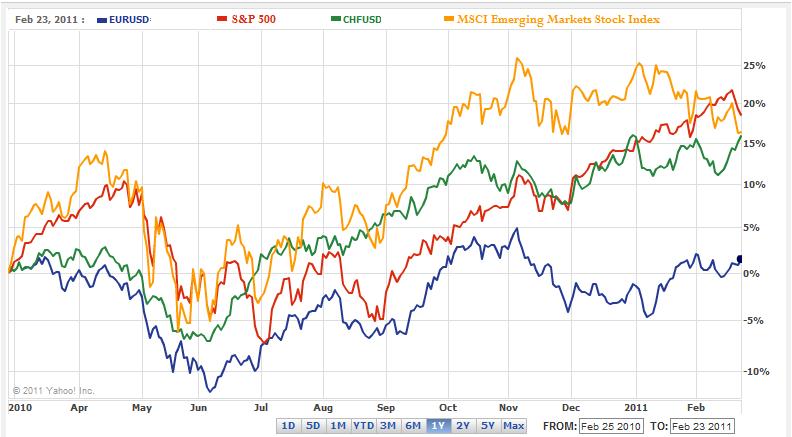
On that note, I found myself looking at in interesting chart today: the EUR/USD vs. CHF/USD vs. S&P 500 Index. My purpose in drawing this particular chart was to ascertain how risk appetite (represented by the S&P) is being reflected in forex markets. As you can see, two observations can immediately be made. CHF/USD very closely tracks the S&P (or vice versa), while the EUR/USD similarly mirrored the S&P for most of the last 12 months, before suddenly diverging in November 2010.


By extension, this raises two questions. First, why should a rising S&P be accompanied by the Swiss Franc? After all, the former is a proxy for risk appetite, while the latter is a symbol of risk aversion. That means that tither the S&P is a weak indicator of risk appetite, or the Swiss France is not being driven by risk aversion. In a way, I think both notions are true. Specifically, US equity prices are are primarily a sign of US economic recovery and strong corporate profits. It’s probably equally accurate to say that the S&P promotes risk appetite, as saying it reflects risk appetite.
Moreover, as US stocks and investor risk appetite have increased, interest in the US Dollar has (somewhat ironically) decreased. One would think that this would spur a depreciation in the Swiss Franc, but I guess this was superseded by the falling Dollar. [For that reason, I actually added the MSCI Emerging Markets Stock Index after I started writing this post, because I realized it was a better proxy for global investor risk appetite. Sure enough, the recent continuation in the Franc's rise has coincided with a correction in emerging market stocks].
While this explains why the Euro should also appreciate for five consecutive months, it doesn’t offer any insight into why the EUR/USD correlation with the S&P should suddenly breakdown. [Question #2]. Recall from my earlier posts that there was a sudden flareup in the Eurozone sovereign debt crisis in November 2010. Around that time, there were a handful of debt downgrades, Ireland received an EU bailout, and there was heightened concern that the crisis would soon spread from Greece to the rest of the PIGS.
This caused a bout of intense Euro instability, against both the US Dollar and Swiss Franc. While the S&P continued rising, interest in emerging market stocks began to flag. It’s extremely tempting to posit a connection between these two trends, especially since it would seem to be implied by the chart. However, I think the correction in emerging markets is due more to Central Bank intervention and a recognition that a bubble was forming, than to the EU sovereign debt crisis. That the Euro has rallied in 2011 even as emerging market stocks have begun to decline, supports this interpretation.
Trying to draw meaningful conclusions from these correlations is frustrating at best, and dangerous at worst. Namely,  that’s because it’s impossible to completely distinguish cause from effect. The two stock market indexes are probably the least dependent of the four items. For instance, the Euro is derived in part from the Dollar, which is derived in part from the S&P. You could say that the Franc takes its cues from the S&P (as a proxy for risk appetite) and the Euro. Second of all, the strongest correlation on the chart (CHF/USD and S&P) is also the most unexpected.
In the end, I think only one solid conclusion can be drawn: uncertainty surrounding the Euro will continue to boost the Franc. While I probably could have told you that without the use of this chart, at the very least, it reinforces the interconnectedness of all financial markets and that even if poorly understood, all trends are ultimately related.

Tuesday, February 15, 2011

Hedging High Forex Uncertainty

Hedging High Forex Uncertainty
In forex, everything is relative. That is no less the case for forex volatility, which is low relative to the spikes in 2008 (credit crisis) and 2010 (EU Sovereign debt crisis), but high relative to the preceding 5+ years of stability. On the one hand, volatility is approaching a two year low. On the other hand, analysts continue to warn of high volatility for the foreseeable future. Under these conditions, what are (currency) investors supposed to do?!

Despite the steady pickup in risk appetite in 2010, there remains a whole a host of forex risk factors. On the economic front, GDP growth remains anemic in western countries, unemployment is high, and consumer confidence is low. Budget deficits and national debts are rising, perhaps to the point that default by a major industrialized countries is inevitable. Emerging market countries seem to be ‘suffering’ from the opposite problem, whereby rapid growth, high commodities prices, and capital inflow has caused inflation to rise precipitously. Some Central Banks will be forced to hike interest rates, while others will try to maintain an easy monetary policy for as long as possible. Political crises flare-up without warning, the Euro risks breaking up, and inclement weather is wreaking havoc on food production.
As a result, most currency-market watchers expect 2011 to be a continuation of 2010. In other words, while we might be spared a major crisis, a generalized sense of uncertainty will continue to pervade forex. According to JP Morgan, “Implied volatility on options for major exchange rates averaged 12.34 percent this year, compared with an average of 10.6 percent since January 2000.”  The currency team of UBS predicts, “The divergence between the strength in emerging markets and the unusual levels of uncertainty in the world’s major economies will cause…super volatility,” whereby massive swings in exchange rates will become the norm.
In this environment, there are a number of things that currency traders should do. The first step is simply to be aware that volatility remains high, which means that wider-than-average fluctuations shouldn’t be a surprise. The next step is to decide whether you think that this volatility will remain at an elevated level for the near-term, or whether you expect it to continue declining. (It’s worth pointing out that volatility is not necessarily a perception of absolute risk, but investor perception of risk). The final step is deciding if/how you will tailor your trading strategy in response to changes in volatility.
In fact, you don’t necessarily need to limit your exposure to volatility. If you are a fundamental investor with a long-term approach, you may very well choose to write-off short-term fluctuations as noise. (Of course, if you are a short-term swing trader, you can’t afford to be quite so indifferent). In addition, if your primary interest is in another asset type, you may choose not to hedge any currency risk. Perhaps you believe that the base currency will continue appreciated and/or you relish the exposure to currency movements as an added benefit of asset price exposure. Along these lines, “During the planning stages of the UBS Emerging Markets Equity Income fund, UBS Global Asset Management considered offering investors a hedged share class. The team abandoned the idea when investors showed a preference for unhedged share classes.”
In addition, hedging currency risk is expensive, especially for exotic/illiquid currencies, and currencies characterized by above average volatility. Not to mention that currency hedges can still move against investors, resulting in heavy losses. Still, in 2010, “Corporations from the U.S., Japan and Europe increased the percentage of projected income protected against swings in exchange rates to a record,” which suggests that fear of adverse exchange rate movements still predominates.
Finally, there are those that want to construct second-order currency strategies based entirely on volatility. Using basic options techniques, such as spreads and straddles, it’s possible to profit from volatility (or lack thereof) regardless of which direction the underlying currencies move in. In fact, the CME Group recently introduced a new product series which seeks to perform this very function. Investors can already buy and sell futures based on short-term volatility in the EUR/USD, which will soon be replicated for all of the major currency pairs.

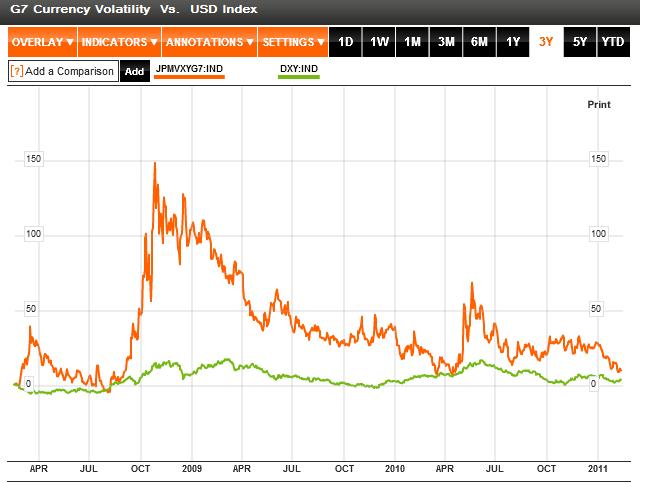
For those of you who like to keep it simple, it’s probably enough to monitor the JP Morgan G7 Currency Volatility Index, which is a good proxy for the risk associated with trading (major) currencies at any given time. When this index spikes, chances are the US Dollar and other safe haven currencies will follow suit.

Wednesday, January 5, 2011

Emerging Market Currencies in 2011

Emerging Market Currencies in 2011
Emerging market assets/currencies registered some unbelievable gains in 2010 as the global economy emerged from recession and investor risk appetite picked up. In the last few months, however, emerging market currencies gave back some of their gains as the EU sovereign debt crisis flared up and the currency wars began to rage. Given that neither of these uncertainties is likely to be resolved anytime soon, 2011 could be a tumultuous year for emerging markets.

Let’s look at the numbers for emerging markets in 2010. The highlights for currencies were the Malaysian ringgit and Thai baht rose, both of which “rose around 10% against the dollar, to their strongest levels since the Asian financial crisis in the late 1990s. The South African rand was up 14% versus the dollar. It was a minor currency, however, that was the world’s best-performing: Mining-rich Mongolia’s togrog finished the year 15% higher against the dollar.” After being allowed to resume its appreciation, the Chinese Yuan rose by a modest 3.5%.
The J.P. Morgan Emerging Markets Bond Index Global returned a record 11.9% in 2010, to the extent that now trades at a modest 2.5% spread over US Treasury bonds. The standout was probably Argentina, whose sovereign debt returned a whopping 35% over the year. Switching to equities, the MSCI Emerging Markets Index returned 16.4%, handily beating the MSCI World Index, which itself rose by an impressive 9.6%. The individual top performing stock markets in 2010 unsurprisingly were “Frontier markets such as Sri Lanka (+96.0%), Bangladesh (+83.5%), Estonia (+72.6%), Ukraine (+70.2%), the Philippines (+56.7%) and Lithuania (+56.5%).” In total, an estimated $825 Billion in private capital flowed into emerging markets during the year, including $53 Billion into local currency bonds.
Emerging markets took advantage of the surge in investor interest to issue record amount of local currency debt and through a plethora of massive stock IPOs. Still, the intractable rise in currency and asset prices was generally seen as an undesirable trend, and emerging markets took significant steps to counter it. More than a dozen central banks have already intervened directly in currency markets in a bid to hold down their currencies. According to the IMF, “Emerging nations had accumulated $1.2 trillion in currency reserves between the financial crisis’s peak in early 2009 and the third quarter of 2010,” including ~$300 Billion in Asia ex-China. Some countries, such as Brazil – poured $1 Billion a week into forex markets during the height of their intervention campaigns.
Speaking of Brazil, it was also among the first to impose capital controls, in the form of a 6% tax on foreign bond investors. Thailand, South Korea, Taiwan and Indonesia have also imposed capital controls, while Mexico has tapped an IMF credit line, which it can use to “manage the stability of its external balances.” Moreover, these countries collectively won an important victory at the fall meeting of the G20, by receiving formal permission for all of these measures.
Alas, most of these inflows were probably justified by fundamentals, which means that they are more difficult to fight against than if they were merely the product of speculation. For example, “Developing countries expanded at a 7.1 per cent rate, compared with 2.7 per cent in advanced countries.” Moreover, emerging market stocks are trading at an average P/E multiple of 14.5, well below their recent historical average. This means that in spite of impressive performance in 2010, corporate profits are still rising faster than share prices. In addition, yields on emerging market sovereign debt still exceed the yields on comparable debt for western countries, despite being lower risk in some ways.

While most of these trends are expected to persist in 2011, there is one overriding wild card. How emerging markets respond to this issue could determine whether emerging market currencies outperform again in 2011 or whether they sink back to more normal levels. Thanks to stimulative economic and fiscal policies, easy credit, and relatively loose monetary policies, emerging markets recorded phenomenal GDP growth in 2010. The downside has been inflation.
Inflation in Brazil and China, for example, officially exceeds 5%. (The actual rates are almost certainly higher). These countries, and a handful of others, are now in the awkward position of trying to control inflation without stimulating further currency appreciation. If they raise interest rates, economic growth and price growth will almost certainly moderate. By the same token,speculative hot money will probably continue to flow in. If they don’t tighten policy, however, inflation could easily spiral out of control, provoking economic stability and even social unrest. The upside is that real interest rates will turn negative, and their currencies will probably be depreciated by investors.
Most analysts expect emerging market central banks to gradually hike interest rates over the next couple years. For fear of stoking further speculation, however, policy will probably remain somewhat accommodative and will be accompanied by strict capital controls. Meanwhile, economic growth should begin to pick up in the industrialized world, accompanied by a similar tightening of monetary and fiscal policy. As a result, investors will be forced to decide whether risk-adjusted real returns in emerging markets are adequate, and if not, whether to reverse the flow of funds back into the industrialized word.

Tuesday, November 2, 2010

Currency Wars: Will Everyone Please Stop Whining!

Currency Wars: Will Everyone Please Stop Whining!
I read a provocative piece the other day by Michael Hudson (“Why the U.S. Has Launched a New Financial World War — and How the Rest of the World Will Fight Back“), in which he argued that the ongoing currency wars are the fault of the US. Below, I’ll explain why he’s both right and wrong, and why he (and everyone else) should shut up and stop complaining.

It has become almost cliche to argue that the US, as the world’s lone hegemonic power, is also the world’s military bully. Hudson takes this argument one step further by accusing the US of using the Dollar as a basis for conducting “financial warfare.” Basically, the US Federal Reserve Bank’s Quantitative Easing and related monetary expansion programs create massive amounts of currency, the majority of which are exported to emerging market countries in the form of loans and investments. This puts upward pressure on their currencies, and rewards foreign speculators at the expense of domestic exporters.
Hudson is right that the majority of newly printed money has indeed been shifted to emerging markets, where the best returns and greatest potential for appreciation lies. Simply, the current economic and investing climate in the US is not as strong as in emerging markets. Indeed, this is why the (first) Quantitative Easing (QE) program was not very successful, and why the Fed has proposed a second round. While there is a bit of a chicken-and-egg conundrum (does economic growth drive investing, or do investors drive economic growth?) here, current capital flow trends suggest that any additional quantitative easing will also be felt primarily in emerging markets, rather than in the US. Not to mention that the US money supply has expanded at the same pace (or even slower) as the US economy over the long-term.
M3 Money Supply 2010
While the point about QE being ineffective is well-taken, Hudson completely ignores the strong case to be made for investing in emerging markets. He dismissively refers to all such investing as “extractive, not productive,” without bothering to contemplate why investors have instinctively started to prefer emerging markets to industrialized markets. As I said, emerging market economies are individually and collectively more robust, with faster growth and lower-debt than their industrialized counterparts. Calling such investing predatory represents a lack of understanding of the forces behind it.
Hudson also overlooks the role that emerging markets play in this system. The fact that speculative capital continues to pour into emerging markets despite the 30% currency appreciation that has already taken place and the asset bubbles that may be forming in their financial markets suggests that their assets and currencies are still undervalued. That’s not to say that the markets are perfect (the financial crisis proved the contrary), but rather that speculators believe that there is still money to be made. On the other side of the table, those that exchange emerging market currency for Dollars (and Euros and Pounds and Yen) must necessarily accept the exchange rate they are offered. In other words, the exchange rate is reasonable because it is palatable to all parties.
You can argue that this system unfairly penalizes emerging market countries, whose economies are dependent on the export sector to drive growth. What this really proves, however, is that these economies actually have no comparative advantage in the production and export of whatever goods they happen to be producing and exporting. If they can offer more than low costs and loose laws, then their export sectors will thrive in spite of currency appreciation. Look at Germany and Japan: both economies have recorded near-continuous trade surpluses for many decades in spite of the rising Euro and Yen.
The problem is that everyone benefits (in the short term) from the fundamental misalignments in currency markets. Traders like to mock purchasing power parity, but over the long-term, this is what drives exchange rates. Adjusting for taxes, laws, and other peculiarities which distinguish one economy from another, prices in countries at comparable stages of development should converge over the long-term. You can see from The Economist’s Big Mac Index that this is largely the case. As emerging market economies develop, their prices will gradually rise both absolutely (due to inflation) and relatively (when measured against other currencies).
Economist-Big-Mac-Index-July-2010
Ultimately, the global economy (of which currency markets and exchange rates represent only one part) always operates in equilibrium. The US imports goods from China, which sterilizes the inflows in order to avoid RMB appreciation by building up a stash of US Dollars, and holding them in US Treasury Bonds. Of course, everything would be easier if China allowed the RMB to appreciate AND the US government stopped running budget deficits, but neither side is willing to make such a change. In reality, the two will probably happen simultaneously: China will gradually let the RMB rise, which will cause US interest rates  to rise, which will make it more expensive and less palatable to add $1 Trillion to the National Debt every year, and will simultaneously make it more attractive to produce in the US.
Until then, politicians from every country and hack economists with their napkin drawings will continue to whine about injustice and impending economic doom.

Thursday, October 28, 2010

Much Ado About Debt

Much Ado About Debt
In addressing the financial/credit/economic crisis, governments around the world have lowered interest rates, bailed-out bankrupt financial insititutions, engaged in wholesale money printing, guaranteed debt, and pumped cash into their economies. However, while such programs may have had some mitigating impact on the crisis, they did little to address the underlying cause. Specifically, debt was merely moved from one institution – one balance sheet – to another. Most of the bad debt that was at the heart of the credit crisis is still outstanding; the only thing that has changed is who is responsible for repaying it.

In many cases, it is governments which have assumed ownership of this debt. Fannie Mae and Freddie Mac remain in a US government conservatorship. The Federal Reserve Bank owns more than $2 Trillion in US Treasuries and Mortgage Backed Securities. The European Union has agreed to collectively back more than $500 Billion in debt belonging to Greece and other unspecified “troubled” member states. The Japanese government has managed to pass off 90% of its sovereign debt onto its own citizens. The UK Treasury has printed money and lent it to the government of the UK. [The graphic below is actually interactive, and is worth a few minutes of perusing].
Global Debt by Country 2010
So what are the possibilities for dealing with this debt? In terms of government debt, the first is to hope that economies can grow faster than the debt, so that it becomes more manageable in relative terms and that one day it can be repaid. Another option is to raise taxes and/or cut spending, and use the extra funds to retire the debt. Given the current economic environment, the former possibility is unlikely. Industrialized economies continue to stall, and much of this growth is being funded with new debt. The latter option would amount to political suicide; any government that is politically naive enough to approve any austerity measures will be voted out of office at the next election. (With the election season about to begin, we won’t have to wait long for confirmation!)
The only alternative then is to reduce the real amount of debt through monetary inflation or currency depreciation. In the US, inflation is at a 50-year low. In Japan, it is non-existent. In the UK and the EU, prices are hardly growing. Monetary policymakers around the world are now actively trying to spur inflation (for reasons unrelated to the reduction of debt), but to no avail. Interest rates are already at rock bottom, and Central Banks have injected Billions of newly minted money into circulation without any impact on prices.
Currency devaluation is already taking place, but the main participants are emerging market economies (which are incidentally more concerned about export competitiveness than reducing the size of the debts). The Japanese Yen is nearing an all-time high, while the Euro has recovered from its spring lows. The British Pound is near its long-term average, while the US Dollar has declined only slightly on a trade-weighted average. In the end, since all of these countries are characterized by high levels of debt, it would be impossible for all of them to devalue their currencies. In addition, the nature of the Euro currency union precludes Eurozone countries from being able to lower their debts through currency devaluation.
The story is the same for private debt. For example, most of the real estate (commercial and residential) debt associated with the collapse of the housing market has yet to be written off. Financial institutions and investors continue to hold onto it with the hope that the real estate market will soon recover, such that the losses will never need to be recognized. While this strategy could vindicate lenders/investors over the long-term, it continues to have a devastating effect in the short-term since it forces the holders of debt to keep more cash on their balance sheets, where it won’t find its way into the global economy.
Euro Franc Dollar Yen 1990-2010 Real Exchange Rates
What are the implications for forex markets? Namely, it would seem to support the notion that emerging market currencies will continue to outperform the G4 currencies over the long-term. Over the near-term, it’s possible that G4 currencies will experience some appreciation, due both to the ebb and flow of risk appetite and the interventions of emerging market Central Banks on behalf of their currencies. Over the long-term, however, the only realistic alternative to default is currency devaluation, and at some point, the forex markets will have to come to terms with the fact that the G4 currencies need to decline. [Chart above courtesy of The Economist].

Tuesday, September 7, 2010

CFTC Passes New Retail Forex Guidelines

I have been covering the US Commodity Future Trading Commission’s (CFTC) efforts to revamp the regulatory structure that governs forex, since it was unveiled earlier this year. On August 30, the CFTC formally published the “final regulations concerning off-exchange retail foreign currency transactions. The rules implement provisions of the Dodd-Frank Wall Street Reform and Consumer Protection Act and the Food, Conservation, and Energy Act of 2008, which, together, provide the CFTC with broad authority to register and regulate entities wishing to serve as counterparties to, or to intermediate, retail foreign exchange (forex) transactions.”

Not only has the CFTC clearly established its authority to be the primary regulator of retail forex, but it has also laid out specific regulations. Chief among them is limiting leverage to 50:1 for major currency pairs, and 20:1 for “other retail forex transactions.” [It's not presently clear which specific currency pairs will be classified as major].  Remember that the original proposal (which, along with my endorsement, generated vehement protest) called for a decline in leverage to 10:1. Due to negative feedback from traders and brokerages, which ascribed malicious political motives to the changes and argued that it would move the entire industry offshore, the CFTC backed down and implemented only a modest decline in leverage. However, it’s important to note that the National Futures Association (NFA) as well as individual brokers will have discretionary power in setting leverage limits lower than 50:1. There will undoubtedly still be some opposition from traders, but I think we can all agree that the new rule represents a fair compromise.
As for the claim that traders would/will move their accounts offshore, this will become largely moot, since all brokerages, regardless of nationality, will be required to register with the CFTC and subject to its rules/oversight. Of course, those traders that are so inclined will still find a way to circumvent the rules by shifting funds “illegally” to unregistered brokers, but they do so at their own risk and will have no recourse in the event of fraud. As Forbes noted, “It seems these new rules will put a stop to Americans trading retail forex offshore to evade CFTC rules. That trend picked up the pace in recent years and it may need to be reversed quickly.”
Brokerages must register as either futures commission merchants (FCMs) or retail foreign exchange dealers (RFEDs).  These institutions will be required to “maintain net capital of $20 million plus 5 percent of the amount, if any, by which liabilities to retail forex customers exceed $10 million.” While this rule will raise the barriers to entry for potential forex start-up brokerages, it will protect consumers against broker bankruptcy. In addition, “Persons who solicit orders, exercise discretionary trading authority or operate pools with respect to retail forex also will be required to register, either as introducing brokers, commodity trading advisors, commodity pool operators (as appropriate) or as associated persons of such entities.”
One final rule change worth noting is quite interesting: brokerages must “disclose on a quarterly basis the percentage of non-discretionary accounts that realized a profit and to keep and make available records of that calculation.” This calculation will be useful both in and of itself, and also in identifying any significant discrepancies between competing brokers. For the first time, we will be able to see whether forex trading is currently profitable (i.e. whether those that profit are in the majority or minority) and whether/how this profitability metric changes over time, in response to particular market conditions.
The new rules go into effect on October 18.

Wednesday, July 7, 2010

US Dollar Paradigm Shift

US Dollar Paradigm Shift
Since the inception of the financial crisis, the Dollar has been treated as a safe haven currency. Simply, when there was a surge in the level of risk-aversion, the Dollar rose proportionally. When risk aversion gave way to risk appetite, the Dollar fell. It was as simple as that.
Lately, this notion has manifested itself in the EUR/USD exchange rate, with the Euro embodying risk, and the Dollar embodying safety. In fact, a carry trading strategy has unfolded along these lines and made this phenomenon self-fulfilling: traders have taken to reflexively selling the Dollar when news is good and selling the Euro when news is bad.

EUR USD July 2010
In recent weeks, this approach appears to be changing. It started with the US stock market, which began to decline, even as the Dollar was still rising. Investors had started to worry about the housing market stalling, the exhaustion of the government stimulus effect, and worst of all, the possibility of a double-dip recession. The most recent data “showed U.S. gross domestic product in the first quarter grew more slowly than expected…The U.S. GDP numbers came after some weaker-than-expected housing numbers and a dovish Federal Reserve, all of which drove U.S. Treasury yields lower and prompted investors to reassess their dollar positions.”
From my point of view, it is not the possibility of a prolonged recession that is itself noteworthy (though this is surely cause for concern), but rather that the currency markets are paying attention it. To be sure, news of the EU sovereign debt crisis continues to dominate headlines and influence investor psychology. Barring any unforeseen developments, however, this crisis probably won’t evolve much further in the short-term, and it’s logical that investors should turn their attention back to the data.
As a result, “The popular risk-related trade on the euro ‘that was prevalent in the first half of this year appears to have derailed for the time being as market players increasingly focus on comparative fundamentals once again,” summarized one trader. In fact, the Dollar has fallen by 5% over the last month, both against the Euro and on a trade-weighted basis.
DXY 2010
Over the long-term, analysts are divided over which narrative will determine the EUR/USD rate. It would seem that until there is some resolution to the sovereign debt crisis (whether positive or negative), an air of uncertainty will continue to hang over the Euro such that it remains an apt funding currency for a carry trade strategy. US capital markets are the world’s deepest, most liquid, and most stable, and in times of crisis will probably continue to attract risk-averse capital.
On the other side are those who argue that the US will shed its safe-haven status and become a growth currency. According to this line of thinking, the US economy will outperform the EU, Japan, and Britain – its peers/competitors in the Top Tier of currencies.
“The euro zone has been stricken by crisis over the debts of its weaker members. Japan will only emerge slowly from deflation and the U.K. has to deal with its record high budget deficit over the next few years,” argued one analyst.
As a result, “The dollar will return to a pattern seen in the early 1980s and late 1990s, when it appreciated as stocks rose…The likelihood that the dollar performs strongly rather than weakly when investors are risk-seeking will signify a major change in the currency markets.” Under this paradigm, the Japanese Yen and the Swiss Franc would probably become even further entrenched as safe-haven currencies.
Finally, it’s worth pointing out that such a paradigm shift wouldn’t necessarily be good for the Dollar. If the US is indeed able to put the recession behind it, then a renewed focus on growth fundamentals would send the Dollar higher. If the Double-Dip materializes, however, Dollar bulls will probably find themselves hoping that the Dollar can retain its safe haven status.

Sunday, May 16, 2010

When Will Attention Shift to the Dollar?

When Will Attention Shift to the Dollar?
The fiscal crisis ravaging the Euro and the Pound has sent the Dollar skyward. On the one hand, the prospect of continued uncertainty and dissolution of the Euro would seem to be an excellent harbinger for continued appreciation in the Dollar. On the other hand, it should only be a matter of time before investors recognize that the Dollar’s fiscal fundamentals are also quite weak.

chart
Unlike during the last few years, analysts are no longer talking about (forex reserve) diversification. It was once widely predicted that the Euro would rival the Dollar for a place in the portfolios of foreign Central Banks. As expected, preferences are now shifting back in favor of the Dollar and to a lesser extent, the Yen. The Pound and Swiss Franc may have a small role, as will the “New” Euro. Over the short-term, however, Central Banks (and investors) will continue to eschew the Euro, if only due to sheer uncertainty.
Given that everything is relative in forex, investors and Central Banks only have so many options when it comes to choosing which currencies in which to denominate their portfolios. Thus, it’s understandable that a sudden crisis in the EU would buoy the Dollar. At the same time, it’s not exactly a good bet that the US isn’t destined to suffer a similar fate.
Due to extremely low short-term interest rates, most investors have been willing to accept low returns when lending to the US (by buying Treasury Securities, and indirectly by simply holding Dollars). At some point, both short-term interest rates and the rate of inflation will rise, and investors will have to re-examine their risk/reward schemes. My suspicion is that investors will demand higher yields in exchange for lending to the US.
Just like with Greece, a US fiscal crisis would probably emerge suddenly. While the US government pays lip service to the notion of balancing its budget and reducing its sovereign debt, even the most optimistic projections show a budget deficit for the next 10 years. Beyond that, the retirement of the baby boom generation and their “entitlement” payment will make it nearly impossible for the US to operate a budget surplus.
In short, the only hope is for the US economy to grow faster than the national debt. If the US economy grows at 4% per year, for example, it will have to run a budget deficit less than 4% of GDP in order to reduce its relative level of debt. On the surface, this seems like a reasonable possibility, but given trends over the last three decades (covering periods of both recession and economic boom), it doesn’t seem likely.
This is not new information. Doomsday theorists have been predicting the bankruptcy of the US for two centuries. Don’t mistake me for doing the same. Rather, I only wish to point out how ironic it is that the Dollar’s fiscal conditions are comparable (and in some ways worse) than some of the problem countries that investors are currently focusing on.
Then again, forex is relative. Some analysts have suggested that the new reserve currency will be gold, oil, and other commodities. Unfortunately, there isn’t nearly enough (liquid) supply of these materials to occupy more than a small portion of reserves. Under the current system, then, investors are pretty much stuck with the Dollar. At this point, betting to the contrary is tantamount to betting on the complete collapse of the modern financial system. A reasonable bet, perhaps, but you can forgive investors for being hesitant to embrace it.